

If you're a mobile mechanic running your own operation, whether as a sole proprietor or single-member LLC, tax season doesn't have to mean handing over more cash than necessary. The truth is, you're sitting on hundreds (maybe thousands) of dollars in legitimate write-offs just by doing what you do every day: driving to clients, buying tools, and keeping vehicles running.
But here's the catch: you've got to know what counts and how to claim it. Let's break down the big deductions mobile mechanics actually qualify for in 2026.
Vehicle Expenses: Your Biggest Tax Advantage
Your vehicle isn't just transportation, it's your mobile shop. And the IRS knows that. For 2026, you've got two ways to write off vehicle costs.

Standard Mileage Rate
The simplest option: deduct 70¢ per mile for every business mile you drive. That includes driving to client locations, parts runs, and any work-related travel. If you're logging 15,000 business miles in a year, that's $10,500 in deductions.
This method works best if you drive a lot but don't spend heavily on repairs or gas. Track your mileage with an app or old-school logbook, just make sure it's detailed and consistent.
Actual Expense Method
Prefer to claim the real costs? You can deduct the business-use percentage of:
- Fuel
- Oil changes
- Repairs and maintenance
- Insurance premiums
- Registration and license fees
- Tolls and parking
If your vehicle is 80% business use, you write off 80% of these expenses. This method usually benefits mechanics with high vehicle costs or expensive repairs.
Pick one method per vehicle per year, you can't mix and match. And if you use the standard mileage rate in year one, you're generally locked into that method for that vehicle going forward.
Tools and Equipment: Write Them Off Fast
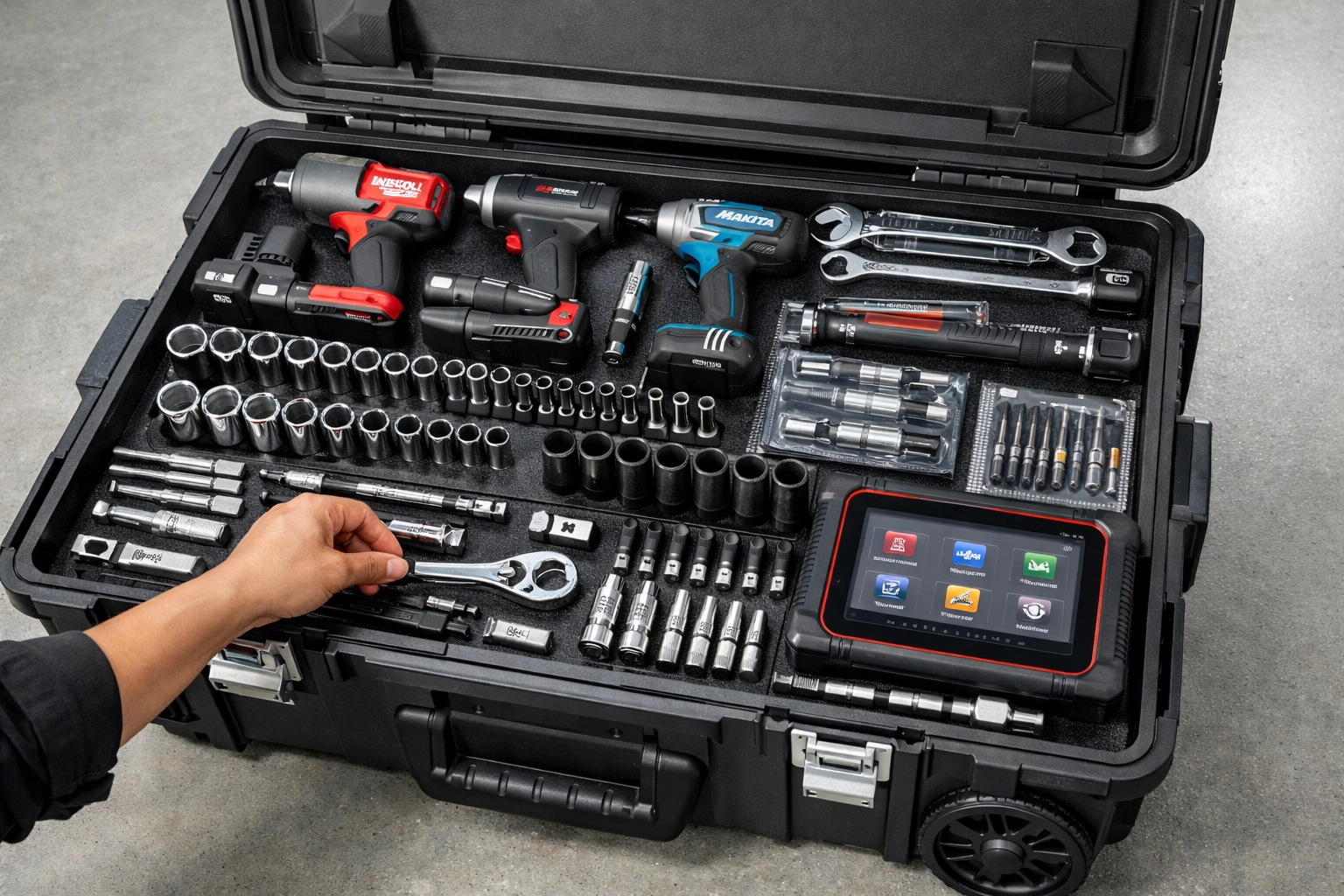
Mobile mechanics live and die by their tools. Good news: the IRS lets you deduct them, and depending on the cost, you might be able to claim the full amount right away.
Tools Under $2,500
Thanks to the IRS's de minimis safe harbor rule, any tool or piece of equipment under $2,500 gets written off in the same year you buy it. That includes:
- Impact wrenches
- Torque tools
- Jacks and jack stands
- Diagnostic scanners
- Specialty sockets and drivers
Bought a $1,200 scanner in March? Deduct it on your 2026 taxes.
Tools Over $2,500
For bigger purchases, like a high-end lift, welder, or full diagnostic system, you can use Section 179 deductions to write off up to $2,500,000 in equipment costs in 2026. That means even a $10,000 lift gets deducted in full the year you buy it, not spread over several years.
This is one of the best small business tax planning strategies available, and it's designed specifically to help businesses like yours grow without waiting years to recover costs.
Maintenance and Repairs: Yes, You Can Deduct Those
If you're keeping a service vehicle running (or fixing client cars with your own parts), those expenses count as ordinary and necessary business costs.
Deductible maintenance includes:
- Oil and fluid changes
- Tire replacements
- Brake work
- Engine and transmission repairs
- Battery replacements
- Alignments and balancing
If you buy parts to complete a client job and bill them separately, those parts are also deductible business expenses. Keep those receipts organized: they add up fast.

Other Write-Offs Mobile Mechanics Miss
Tax preparation for small business isn't just about vehicles and tools. Mobile mechanics qualify for plenty of other deductions that often fly under the radar.
Insurance Premiums
Business liability insurance, commercial auto coverage, and even health insurance premiums (if you're self-employed and don't have access to a spouse's plan) are deductible.
Advertising and Marketing
Whether you're running Facebook ads, printing business cards, or paying for a website, marketing costs are 100% deductible.
Uniforms and Safety Gear
If you wear branded shirts, work boots, gloves, or safety glasses specifically for your business, those count. Personal clothing doesn't: but anything you wouldn't wear outside of work does.
Training and Certifications
ASE certifications, trade school courses, or manufacturer training programs? All deductible. Even trade magazine subscriptions count.
Home Office Expenses
If you use part of your home exclusively for business: like a garage bay where you store tools or an office where you handle invoicing: you can deduct a portion of your rent or mortgage, utilities, and internet.
Bank Fees and Licensing
Business checking account fees, credit card processing fees, and state business license renewals are all fair game.
Keep Your Records Tight
The IRS doesn't take your word for it. If you want to claim these deductions, you need documentation.

What to track:
- Mileage logs with dates, destinations, and purpose
- Receipts for every tool, part, and supply purchase
- Bank and credit card statements showing business expenses
- Invoices you send to clients
- Insurance policy documents
Use a mileage tracker app, snap photos of receipts, or keep a dedicated folder (digital or physical). When tax season rolls around, you'll thank yourself.
Sole Proprietor or LLC? It Matters
If you're still operating as a sole proprietor, you're missing out on liability protection and potential tax advantages. A single-member LLC gives you:
- Personal asset protection if a client sues
- More credibility with customers and vendors
- Flexibility to choose how you're taxed (sole prop, S corp, etc.)
Setting up an LLC is straightforward, and the cost is minimal compared to the protection and tax planning options it opens up. If you're serious about your mobile mechanic business, it's worth the upgrade.
Let MCG Service Handle the Heavy Lifting
Tax prep doesn't have to be overwhelming. At MCG Service, we specialize in tax preparation for small business owners just like you: mobile mechanics, solo pros, and niche entrepreneurs who need more than cookie-cutter advice.
We'll help you:
- Identify every deduction you qualify for
- Track expenses year-round so tax season is painless
- Set up your LLC the right way
- Plan strategically for 2026 and beyond
Whether you're filing as a sole proprietor or running a single-member LLC, we've got your back. Reach out today and let's make sure you're keeping more of what you earn.