

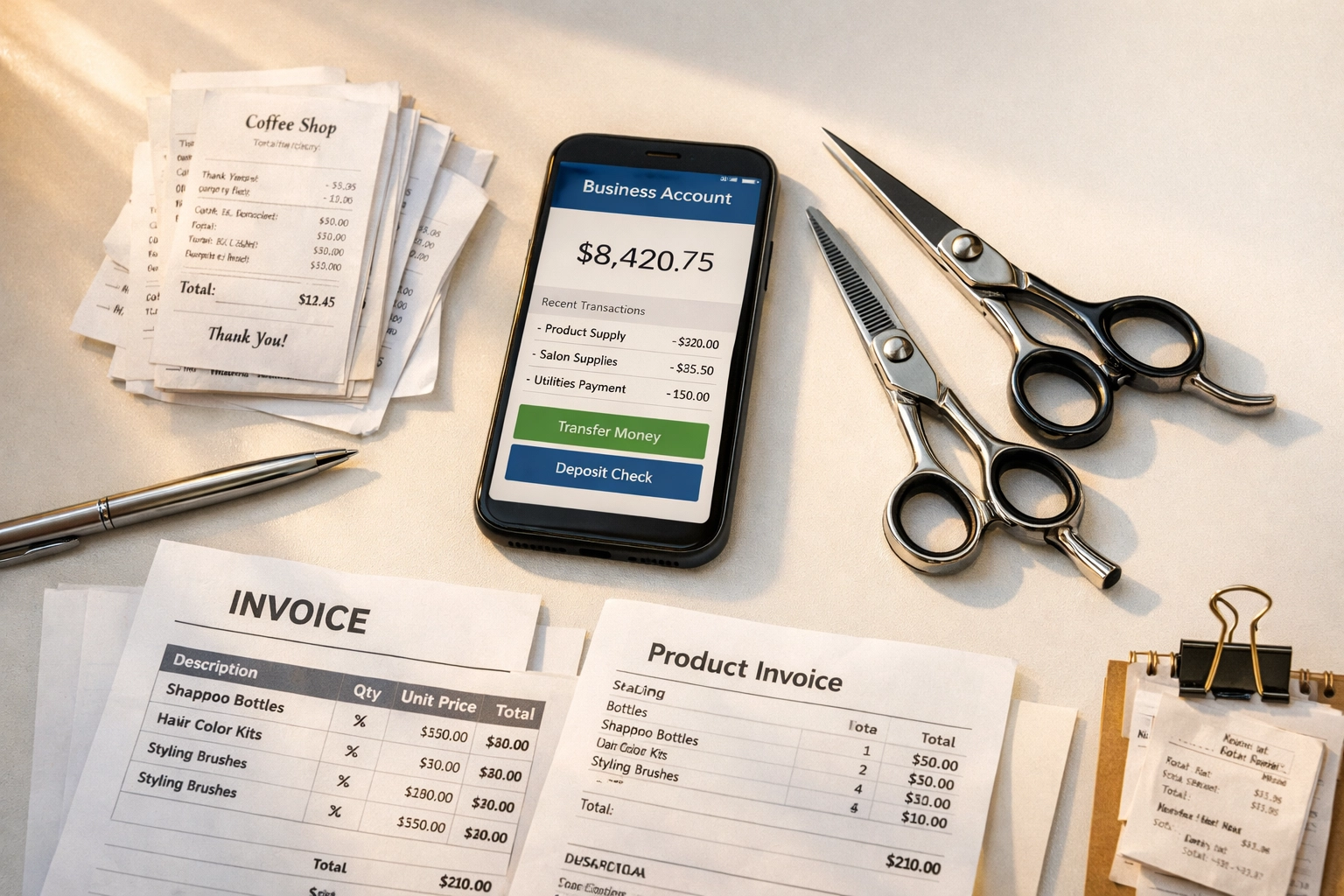
You're spending money every single day to run your business. Clippers. Color. Shampoo. Booth rent. That advanced balayage class.
Most of it's deductible. Most stylists and barbers miss it.
This guide breaks down what counts, how to track it, and how proper expense tracking cuts your tax bill: without hiring a CPA full-time.
Why Expense Tracking Matters
Your gross revenue isn't your profit. Between product costs, booth rental, and business expenses, your actual take-home is lower: and that's what the IRS taxes you on.
Track expenses properly and you reduce taxable income legally. Miss expenses and you overpay every April.
Cash tips, Venmo payments, and credit card transactions make it easy to lose track. A solid system ensures nothing slips through.

Deductible Expenses: What Counts
Booth Rental and Facility Costs
Rent is your biggest monthly expense and fully deductible. This includes:
- Booth or chair rental fees
- Salon suite lease payments
- Utilities if you pay them directly
- WiFi and phone service used for appointments
If you own your space, deduct mortgage interest, property taxes, insurance, and repairs.
Supplies and Products
Everything you use to deliver services counts:
- Hair color, developer, toner
- Shampoo, conditioner, styling products
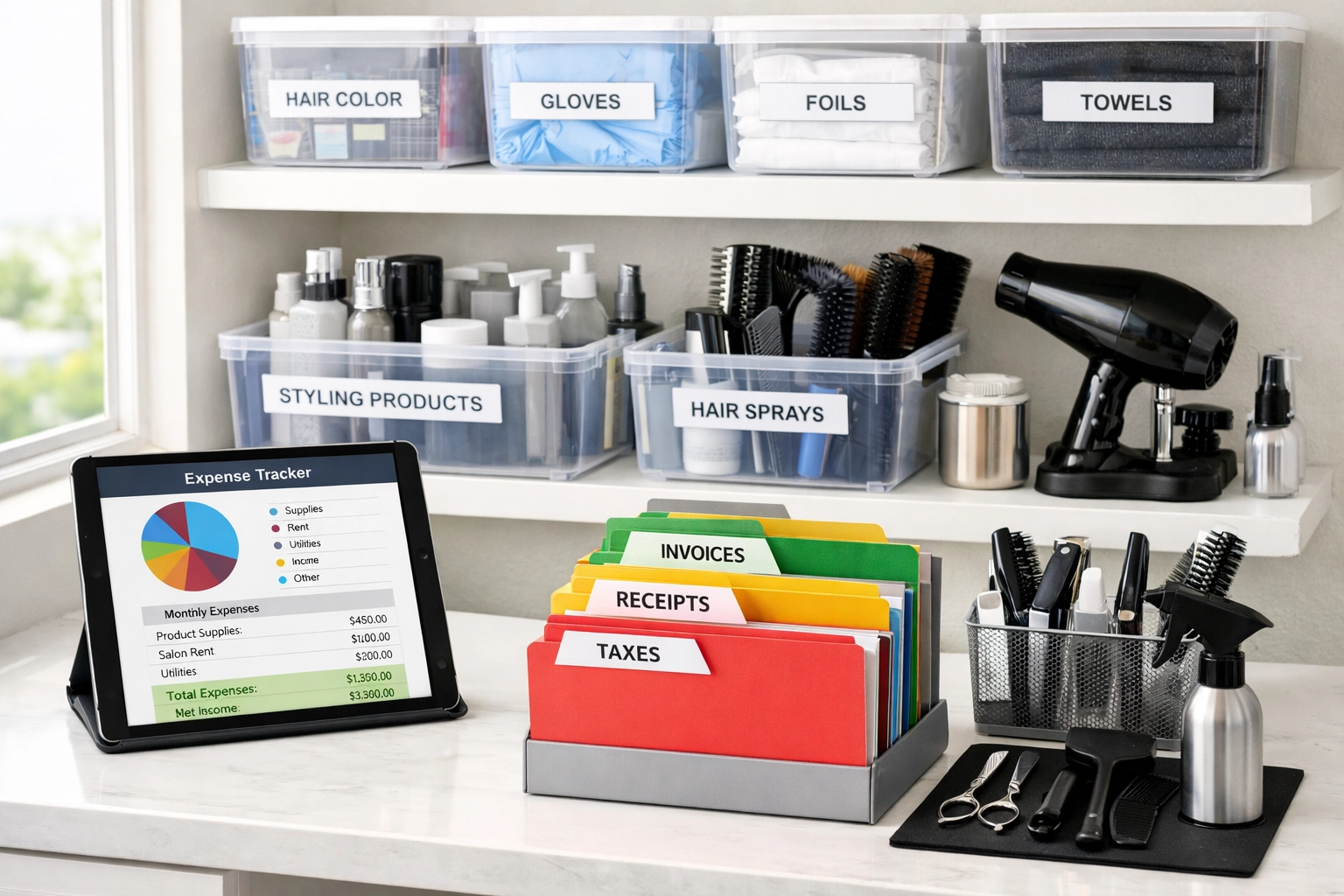
- Foils, gloves, capes, towels
- Scissors, clippers, razors, combs
- Sanitizing supplies and disinfectants
Retail products you sell don't count as deductible expenses: they're cost of goods sold, which you track separately.
Professional Development
Continuing education isn't optional in this industry. Good news: it's deductible.
- Cosmetology or barber license renewals
- Advanced technique classes (balayage, fades, extensions)
- Trade shows and industry conferences
- Subscriptions to professional magazines or online courses
Keep receipts for registration fees, travel, and lodging if the event requires overnight stays.
Marketing and Business Promotion
Getting clients in the chair costs money. Deduct:
- Social media ads (Instagram, Facebook)
- Business cards and printed materials
- Website hosting and domain fees
- Booking software subscriptions (Vagaro, Schedulicity)
- Photography for portfolio work
Word-of-mouth is free. Everything else counts.
Insurance and Licenses
Professional liability insurance protects you from claims. Business insurance protects your tools and inventory. Both are deductible.
State and local licensing fees also count: track renewal dates so you don't miss them.

Vehicle and Mileage
If you drive for business, track it. Deductible trips include:
- Supply runs to beauty distributors
- Travel to education events
- Mobile service appointments (home visits, nursing homes)
- Bank deposits and business errands
Use the standard mileage rate (67 cents per mile in 2026) or track actual vehicle costs. Choose one method and stick with it.
Don't deduct your daily commute to your booth: personal miles don't count.
How to Track Expenses
Choose Your System
Spreadsheets work for smaller operations. Free templates exist for Google Sheets and Excel. Customize categories, track by month, calculate totals automatically.
Drawback: manual entry takes time and you can miss transactions.
Accounting software automates most of the work. QuickBooks Self-Employed, FreshBooks, and Wave sync with bank accounts and categorize expenses automatically.
Cost ranges from free (Wave) to $15–$30 monthly. Worth it if you process 50+ transactions monthly.
Daily Habits
Record every transaction when it happens:
- Snap receipt photos immediately (use your phone)
- Log cash purchases before you forget amounts
- Separate business and personal spending: use a dedicated business account
At day's end, reconcile cash payments against your appointment book or POS system.
Monthly Review
Set aside two hours monthly to:
- Reconcile bank statements against your records
- Categorize uncategorized transactions
- Review which services generated the most income
- Set aside estimated tax payment amounts
Small business tax planning works best when you're proactive, not reactive in April.

Common Mistakes to Avoid
Mixing Personal and Business Expenses
Using the same account for business and personal spending creates a nightmare at tax time. Open a separate business checking account: even as a sole proprietor or single-member LLC.
Forgetting Small Purchases
$8 here, $15 there: small expenses add up to hundreds or thousands yearly. Track everything. The IRS doesn't care about purchase size; you can deduct business expenses of any amount.
Losing Receipts
Digital or physical, keep them organized. Most audit issues stem from missing documentation, not incorrect deductions.
Ignoring Quarterly Estimated Taxes
Self-employed professionals pay taxes quarterly. Miss a payment and you'll owe penalties. Use monthly reviews to calculate 25–30% of net profit and set it aside.
Tax preparation for small business means planning year-round, not scrambling in April.
Setting Up for Success
Create Your Chart of Accounts
Organize finances into clear categories:
Income: Service revenue (cuts, color, styling), retail product sales, booth rental income (if you sublet)
Expenses: Supplies, rent, marketing, insurance, licensing, education, mileage, software subscriptions
Breaking down revenue by service type shows which offerings drive profit. You might discover color services generate 60% of revenue but only 40% of appointments: insight that shapes scheduling and pricing.
Start Simple
Pick three things:
- A dedicated business account
- A receipt storage method (app or folder)
- Weekly time to log transactions
Build from there. The hardest part is starting. Once your system exists, maintenance becomes routine.
How MCG Service Helps
Tax preparation for small business owners means understanding industry-specific deductions. MCG Service works with barbers, stylists, and beauty professionals to maximize write-offs and minimize tax liability.
Services include:
- Tax planning consultations: Review your expenses quarterly, identify missed deductions, and plan estimated payments
- Bookkeeping support: Organize your financial records throughout the year
- Business formation: Set up your LLC structure properly for tax advantages
- Insurance solutions: Business liability, life insurance, and coverage tailored to service professionals
Small business tax planning isn't one-size-fits-all. MCG Service customizes strategies for booth renters, salon owners, and mobile stylists.
Visit mcgservicellc.com/tax to schedule a consultation or contact us with questions about your specific situation.
Take Action Now
Start tracking today. Open a business bank account this week. Download a receipt app before your next supply run.
Proper expense tracking reduces your tax bill by thousands annually. Most stylists and barbers leave money on the table simply because they don't document what they spend.
You're already running a business. Track it like one.
Every receipt saved is money kept. Every deduction claimed is profit protected.
Cut your taxes as precisely as you cut hair: with the right tools and technique.