
If you're a personal trainer, gym instructor, or fitness coach, you've probably wondered: can I write off my gym membership? What about those resistance bands, kettlebells, and foam rollers piling up in your home studio?
The answer isn't as straightforward as you'd hope: but there's good news. If you're self-employed as a sole proprietor or single-member LLC, you can deduct business-related fitness expenses as long as they meet specific IRS rules. Let's break down what qualifies, what doesn't, and how to make the most of your tax preparation for small business.
Understanding "Ordinary and Necessary" Business Expenses
The IRS uses two key words when deciding if something is deductible: ordinary and necessary.
- Ordinary means the expense is common and accepted in your industry
- Necessary means it's helpful and appropriate for your business (not that you'd collapse without it)
For fitness professionals, this opens the door to writing off gear, certifications, and even portions of your gym membership: if you use them to generate income. The trick is proving business use, not personal benefit.
Here's the reality: your gym membership probably won't qualify as a full deduction just because you're a trainer. But the equipment you use to train clients? That's a different story.

Can You Deduct Your Gym Membership?
Short answer: usually not entirely, but sometimes partially.
The IRS views gym memberships as personal expenses by default. Even if you're a fitness coach, they assume you're also benefiting personally from that membership. However, there are two scenarios where you might qualify for a deduction:
1. You Meet Clients at the Gym
If you conduct business at your gym: like training clients there: you can deduct the business portion of your membership. The key is tracking how often you use the gym for business versus personal workouts.
Example: You visit the gym 15 times per week. Ten sessions are paid client training, and five are your own workouts. You could potentially deduct 66% of your membership cost (10 business uses ÷ 15 total uses).
Keep detailed records. Screenshot your calendar. Save client receipts. The IRS will want proof if they audit.
2. You Operate a Home-Based Gym Business
If you're a personal trainer who runs sessions out of a home gym or rented studio space, you're in a better position. Your entire setup: including equipment: becomes a legitimate business expense. More on that below.
Important: You can't deduct a gym membership just because you "need to stay in shape for your image." That's considered a personal expense, even if you argue it's part of your brand.
Equipment and Gear: Your Best Deduction Opportunity
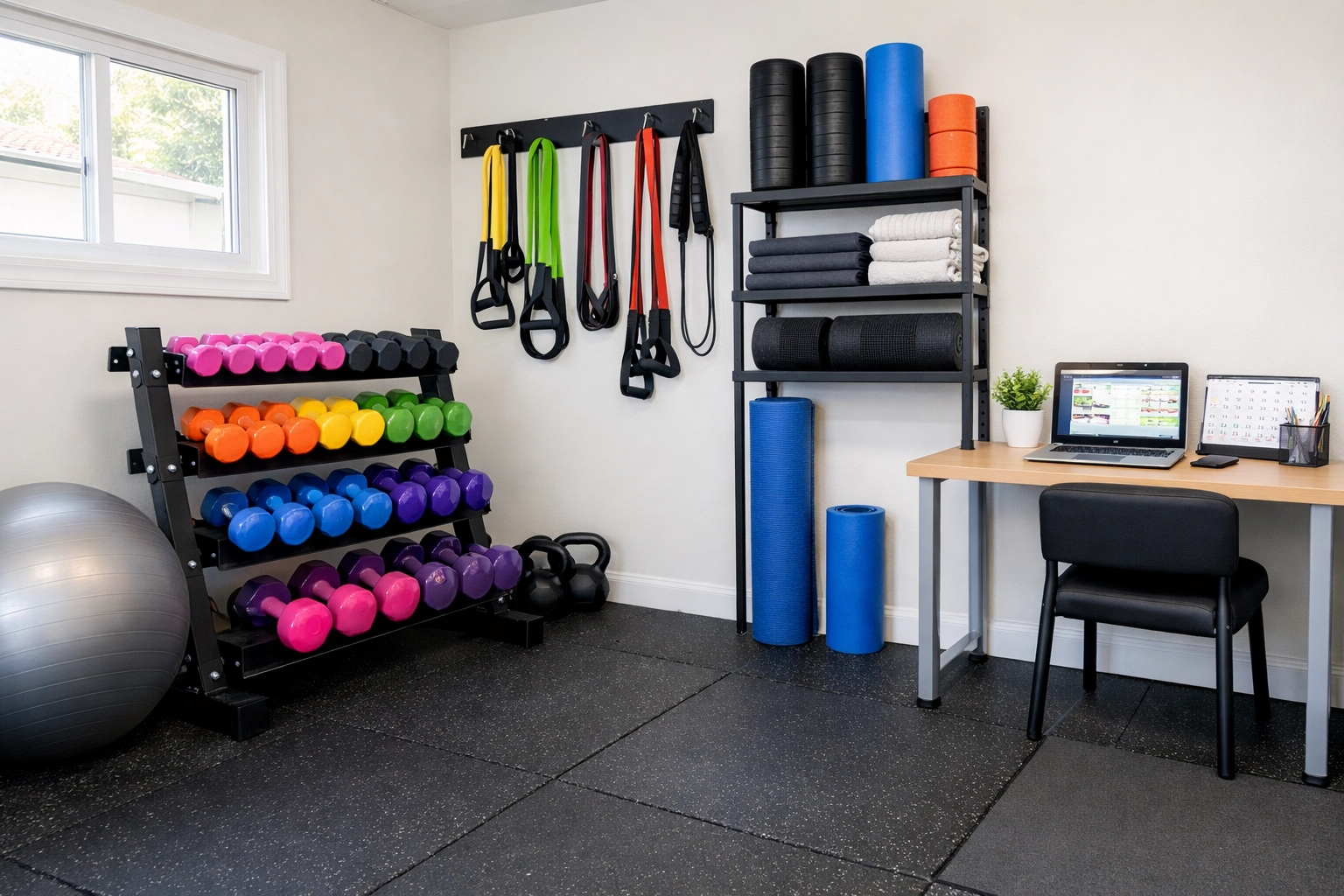
This is where fitness professionals win big. Business equipment is almost always deductible, especially if you're self-employed.
Here's what qualifies:
- Free weights and dumbbells
- Resistance bands and loops
- Kettlebells
- Yoga mats and blocks
- Foam rollers and massage tools
- TRX suspension trainers
- Medicine balls
- Exercise benches or stability balls
- Heart rate monitors and fitness trackers (if used to track client progress)
- Bluetooth speakers for training sessions
If you purchase equipment solely or primarily for training clients, you can write off the full cost. You have two options for claiming the deduction:
- Deduct it all at once under Section 179 (if the equipment costs less than $2,890 in 2026)
- Depreciate it over time if it's a larger purchase, like a treadmill or Peloton for your studio
Even smaller items add up. That $40 yoga mat? Deductible. The $200 kettlebell set? Deductible. The foam roller you use for client cool-downs? You guessed it: deductible.
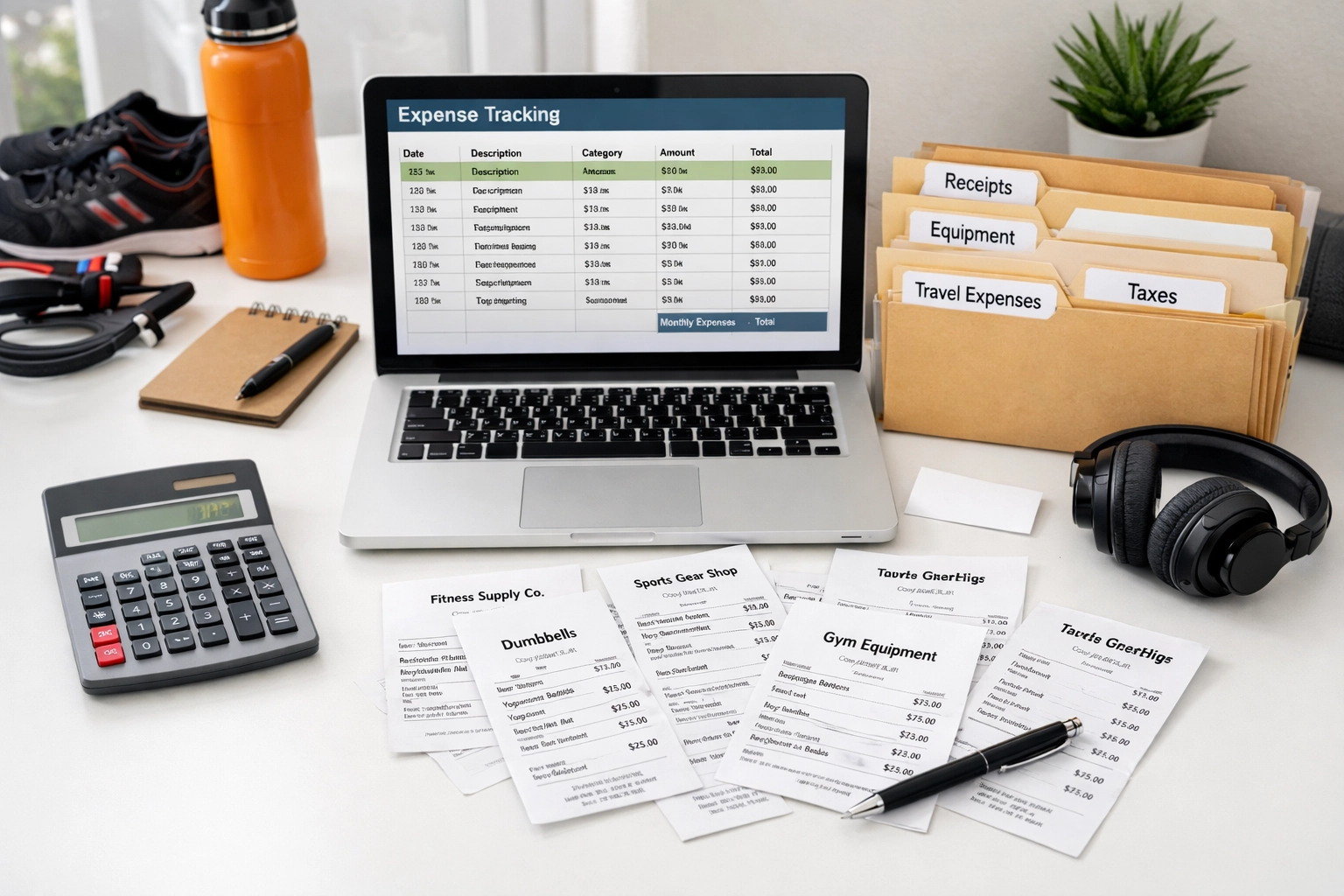
Pro tip: Keep receipts and snap photos of your equipment in use during training sessions. This creates a paper trail that shows business use, which is critical for small business tax planning.
Certifications and Continuing Education
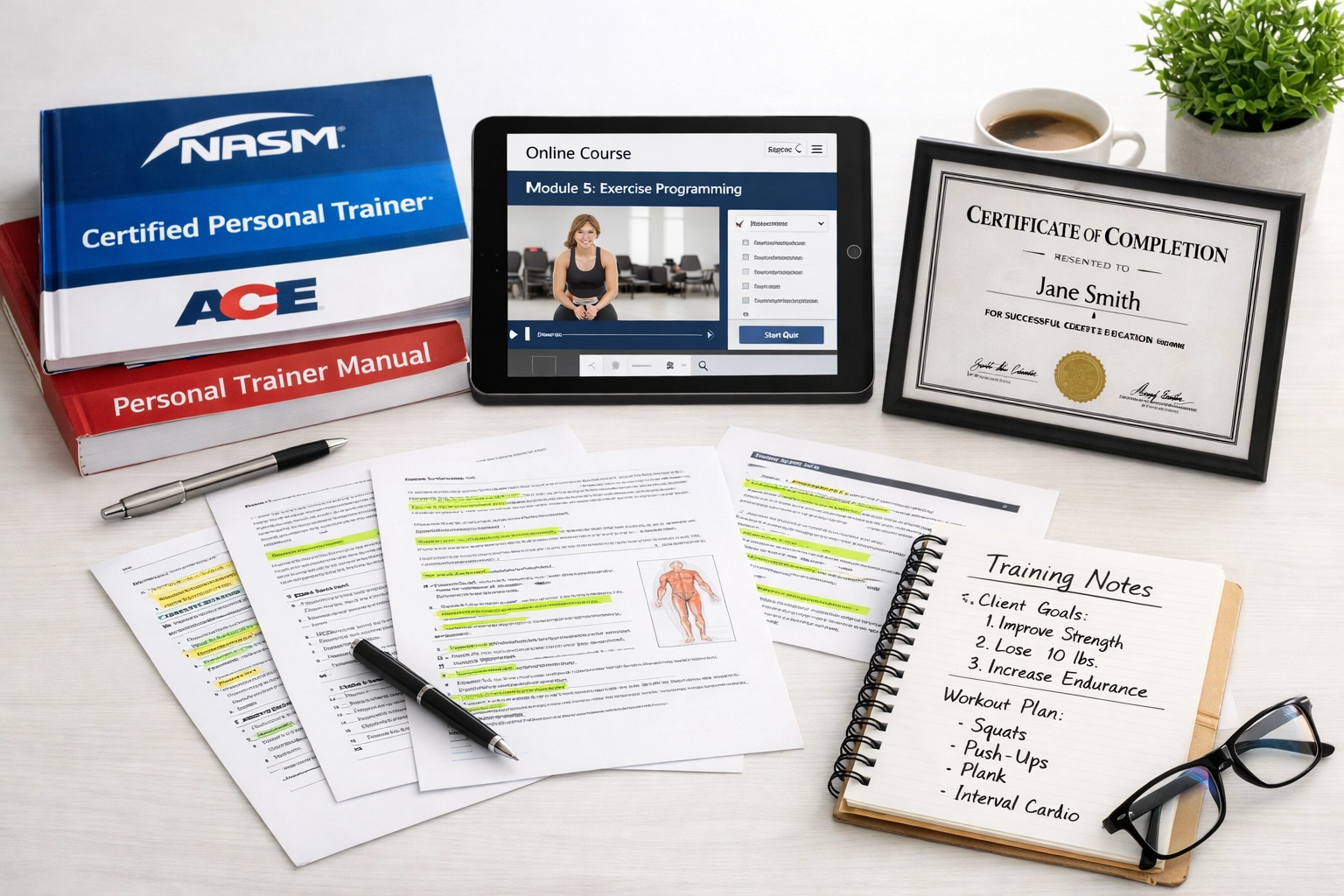
If you're serious about your career, you're probably investing in certifications: NASM, ACE, ISSA, or specialized credentials like prenatal fitness or sports nutrition.
Good news: certifications and continuing education are 100% deductible as long as they maintain or improve your skills in your current profession.
This includes:
- Certification exam fees
- Study materials and textbooks
- Online courses and workshops
- Recertification fees
- Travel expenses to attend in-person training (mileage, lodging, meals)
However, you cannot deduct education that qualifies you for a new profession. For example, if you're a personal trainer taking classes to become a licensed physical therapist, that's not deductible: it's preparing you for a different career.
If your certification is directly tied to your work as a trainer or coach, claim it. The IRS considers this part of tax preparation for small business because it's an investment in maintaining your income stream.
Home Office Deduction for Fitness Coaches
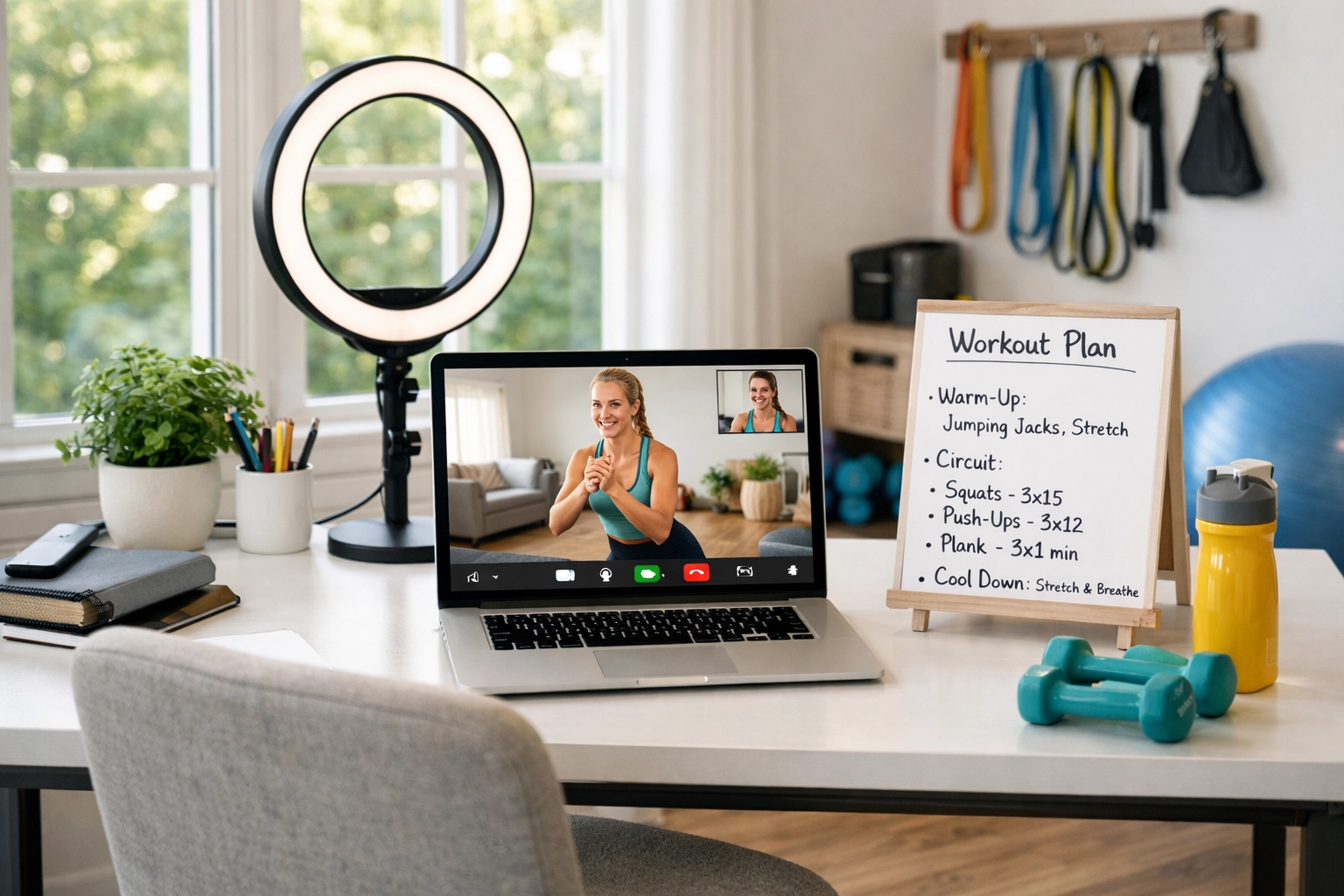
If you train clients virtually (Zoom sessions, online coaching programs) or run administrative tasks from home, you might qualify for a home office deduction.
Here's what you need:
- A dedicated space in your home used regularly and exclusively for business
- No personal use of that space (it can't double as your guest room)
You can calculate the deduction two ways:
- Simplified method: $5 per square foot, up to 300 square feet (max $1,500 deduction)
- Actual expense method: Calculate the percentage of your home used for business, then deduct that percentage of rent, utilities, internet, and home repairs
If you've converted a garage, basement, or spare room into a home gym where you train clients, that entire space may qualify. You can also deduct a portion of your homeowner's or renter's insurance that covers the business area.
What You Can't Deduct (Even Though You Really Want To)
Let's clear up some myths:
❌ Personal gym memberships (unless you meet the business-use test)
❌ Workout clothes (even branded gear: the IRS says it's "suitable for everyday wear")
❌ Supplements and protein powder (considered personal health expenses)
❌ Cosmetic procedures or weight loss programs (not deductible as business expenses)
❌ Your own fitness tracker or smartwatch (unless used exclusively to monitor client progress)
If it's something you'd use whether or not you were a trainer, it's probably not deductible.
How MCG Service Can Help with Tax Preparation for Small Business
Navigating these rules can feel overwhelming: especially if you're juggling client schedules, content creation, and business admin. That's where professional support makes a difference.
At MCG Service, we specialize in small business tax planning for self-employed professionals, including personal trainers, gym instructors, and fitness coaches. We help you:
- Identify every deduction you're entitled to (so you're not leaving money on the table)
- Organize receipts and expenses throughout the year
- Set up quarterly estimated tax payments to avoid surprises
- Ensure compliance with IRS rules so you don't get flagged for an audit
- Advise on LLC formation and business structure to maximize tax benefits
Whether you're a sole proprietor just starting out or a single-member LLC scaling your coaching business, we'll make sure your tax strategy works as hard as you do.
Final Thoughts: Claim What You Deserve
Personal trainers and fitness coaches work hard to build their businesses: often investing thousands into certifications, equipment, and workspace before they see a return. The good news? Most of those expenses are deductible if you know the rules.
The key is documentation. Track your business-related purchases, separate them from personal expenses, and work with a tax professional who understands small business tax planning for self-employed individuals.
If you're ready to take control of your taxes and stop guessing what qualifies, reach out to MCG Service. We'll help you keep more of what you earn: so you can focus on what you do best: helping your clients crush their goals.
Got questions about your specific situation? Drop us a message. We're here to help fitness pros like you stay compliant, stress-free, and profitable in 2026 and beyond.