
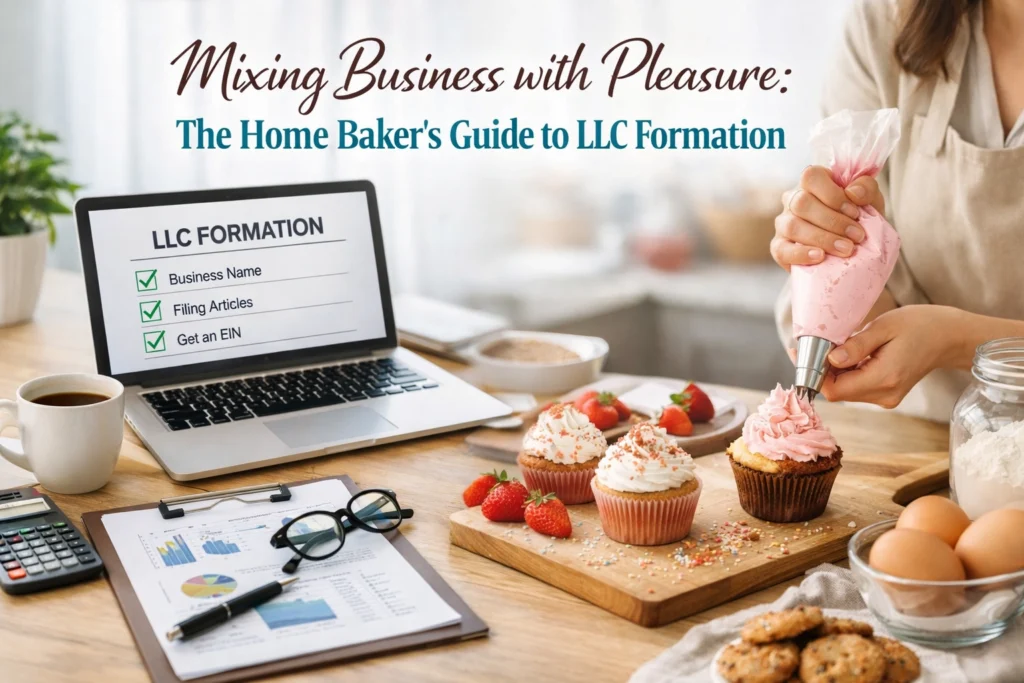
You've perfected your sourdough recipe. Your custom cakes are showing up on Instagram feeds. Orders are rolling in through DMs and Facebook Marketplace. But here's the thing nobody talks about at 2am when you're piping buttercream flowers: your personal assets are completely exposed.
If someone gets sick from your product: even if it's not your fault: they can come after your house, your car, your savings. That's the reality of running a home bakery as a sole proprietor.
This guide breaks down why a Single-Member LLC is the smart move for home-based bakers and chefs, how it protects you differently than staying a sole proprietor, and exactly what you need to do to register an LLC without the legal jargon.
Why Home Bakers Need More Than a Business Name
Most home bakers start the same way: baking for friends, setting up a Facebook page, maybe getting a business license. Technically, that makes you a sole proprietor: the default business structure that requires zero paperwork to create.
Here's the problem: as a sole proprietor, there is no legal separation between you and your business. Your business debt is your personal debt. A lawsuit against your bakery is a lawsuit against you personally.
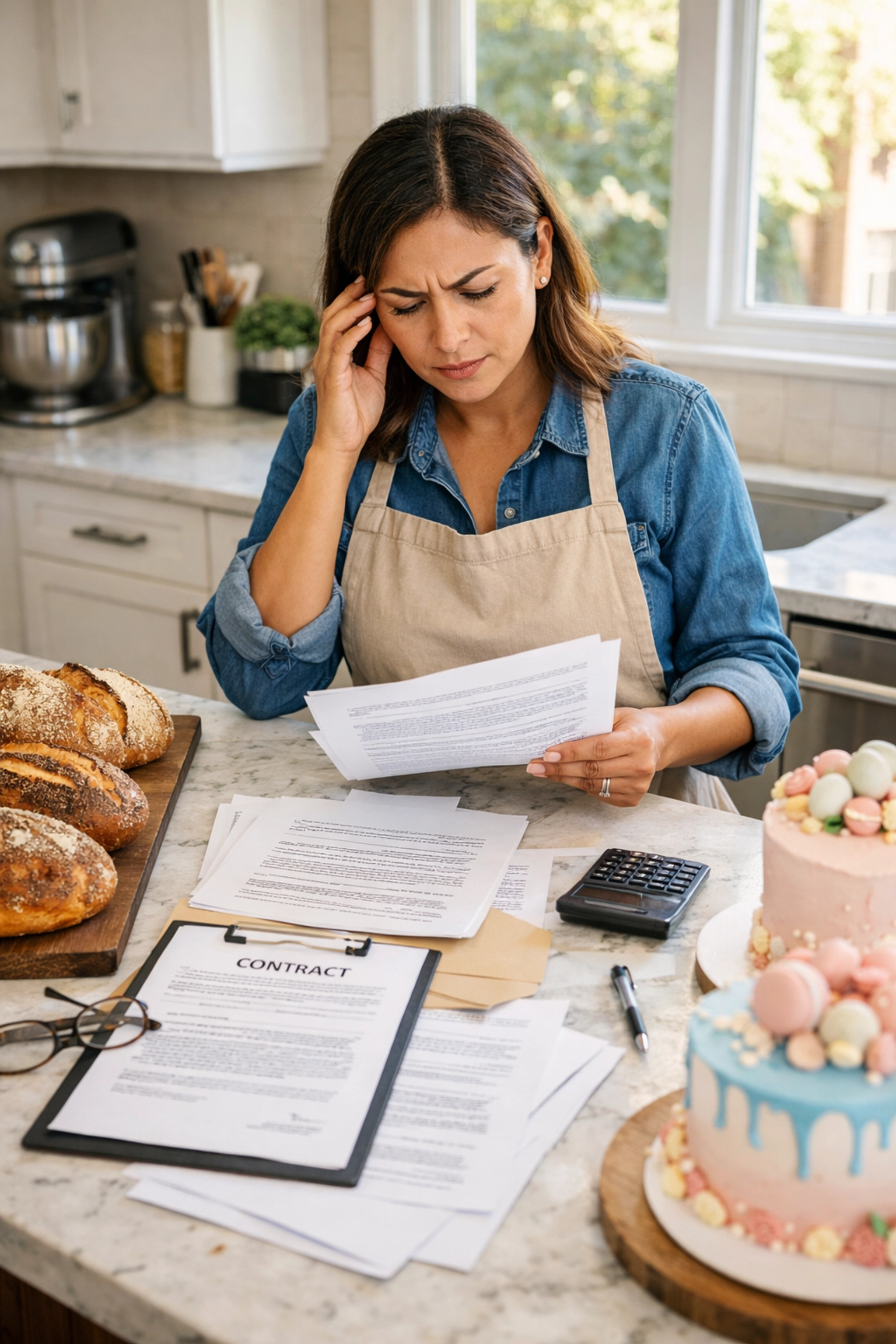
Consider these real scenarios:
- A customer claims food poisoning from your cupcakes
- Someone has an allergic reaction you didn't anticipate
- A delivery driver slips on your driveway while picking up an order
- Your state finds you violated cottage food laws you didn't know existed
Without liability protection, all of these situations put your personal finances at risk.
Single-Member LLC: The Protection Home Bakers Actually Need
A Single-Member LLC (Limited Liability Company) creates a legal barrier between your personal assets and your business operations. If your bakery gets sued, the lawsuit targets the LLC: not your personal bank account, home, or car.
It's called "single-member" because you're the only owner, which keeps things simple. You're not dealing with partners, complex tax structures, or corporate formalities. You get liability protection without the headache.
LLC vs. Sole Proprietorship: The Real Difference
| Sole Proprietorship | Single-Member LLC |
|---|---|
| No paperwork to start | Requires state filing |
| Zero liability protection | Protects personal assets |
| Business income = personal income | Can choose tax treatment |
| Easy to set up | Takes 2-4 weeks to form |
| No annual fees (usually) | State annual fees apply |
The cost difference? You'll pay $50–$500 to register an LLC depending on your state, plus annual fees that typically range from $0–$300. For most home bakers, that's the cost of 2-3 custom cake orders.
The protection? Potentially saving your entire financial life.

What Single-Member LLC Actually Protects (And What It Doesn't)
An LLC shields you from:
- Customer lawsuits over product liability
- Contract disputes with vendors or clients
- Business debt (if you didn't personally guarantee it)
- Claims related to business operations
An LLC does NOT protect you from:
- Intentional wrongdoing or fraud
- Personal guarantees on loans or leases
- Your own negligence (though insurance covers this)
- Payroll taxes you failed to pay
Think of an LLC as a fence around your personal assets. It works best when paired with product liability insurance, which covers medical expenses and legal costs if someone gets sick from your food.
How to Register an LLC for Your Home Bakery
The process is simpler than most bakers think. Here's the step-by-step:
Step 1: Choose Your Business Name
Your LLC name must be unique in your state and include "LLC" or "Limited Liability Company." Check availability through your Secretary of State website. Pro tip: search for your name on Google and social media too: you want a name that's legally and digitally available.
Step 2: Check Cottage Food Laws
Before you file anything, verify that home bakeries are legal in your state. Cottage food laws vary significantly:
- Some states limit you to $50,000 in annual sales
- Others restrict which products you can sell (no cream-filled items, for example)
- Many require labeling with specific disclosures
Search "[Your State] cottage food laws" or check your state's Department of Health website.

Step 3: File Articles of Organization
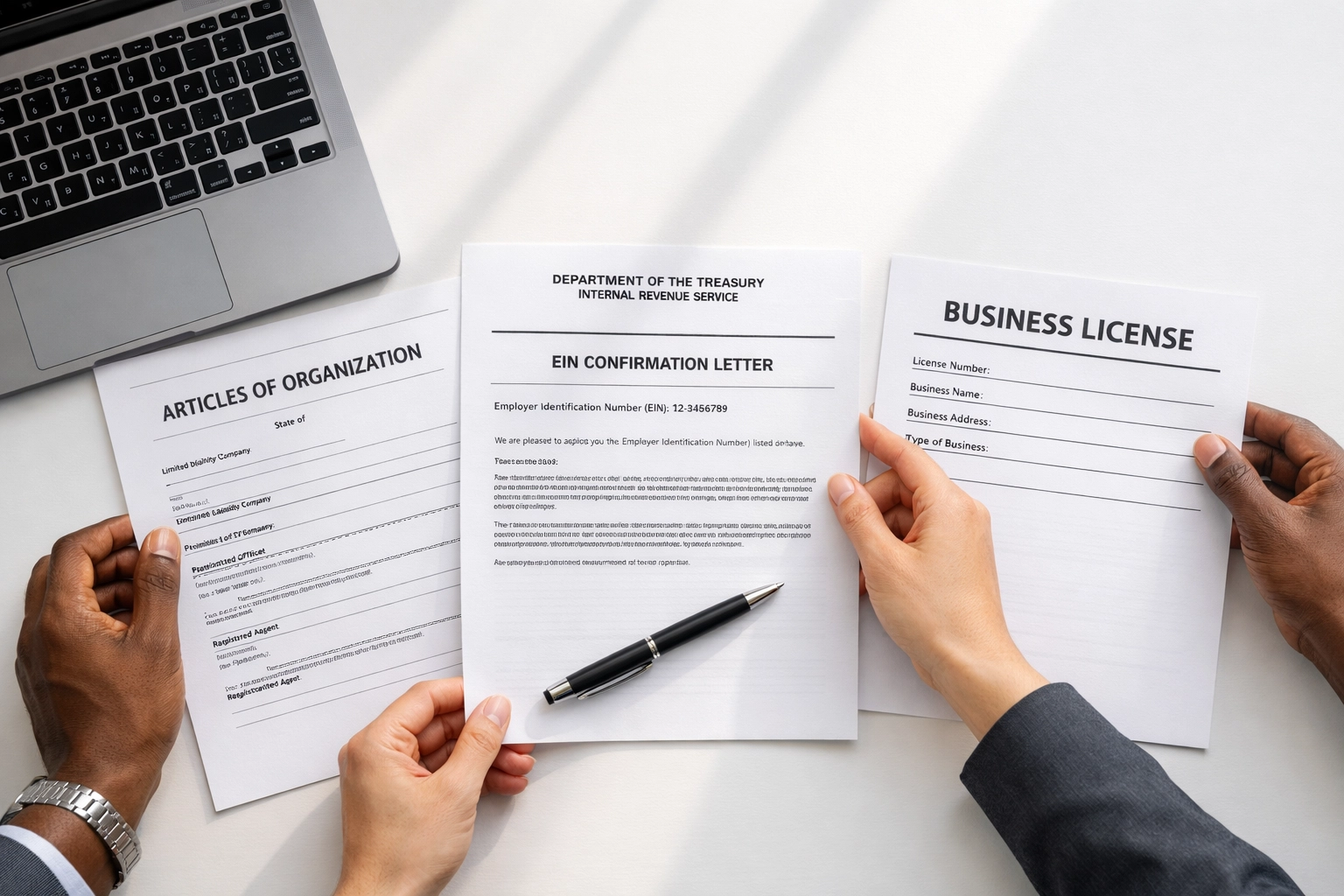
This is the official document that creates your LLC. You'll file it with your state's Secretary of State office (or equivalent). You'll need:
- Your business name
- Your registered agent information (more on this below)
- Your business address
- The LLC's purpose (can be as simple as "bakery services")
Filing fees range from $50–$500 depending on your state. Processing takes 1–4 weeks in most states, though expedited options cost extra.
Step 4: Get Your EIN
An Employer Identification Number (EIN) is like a Social Security number for your business. You need it to open a business bank account, hire employees, or file business taxes. The good news? It's free and takes 10 minutes on the IRS website.
Step 5: Open a Business Bank Account
Keep your business and personal finances completely separate. This isn't just good practice: it's what maintains your LLC protection. Mix funds, and a court might "pierce the corporate veil" and go after your personal assets anyway.
Step 6: Get Required Licenses and Insurance
Depending on your state and local regulations, you may need:
- Business license
- Food handler's permit
- Home occupation permit
- Product liability insurance
- Possibly commercial kitchen certification (if you exceed cottage food limits)
The Registered Agent Requirement Nobody Mentions
Every LLC needs a registered agent: a person or company authorized to receive legal documents on behalf of your business. This includes tax notices, lawsuit papers, and official state correspondence.
You can be your own registered agent, but there's a catch: your home address becomes public record. Anyone can look up your LLC and see where you live.
Many home bakers use a registered agent service instead. For $100–$300 per year, a professional service:
- Keeps your home address private
- Receives legal documents during business hours (not awkwardly handed to you in your driveway)
- Sends you digital alerts when documents arrive
- Maintains compliance across states if you expand
MCG Service offers registered agent services specifically for small business owners who want privacy and peace of mind without the premium price tag.
Tax Considerations for Single-Member LLCs
By default, the IRS treats single-member LLCs as "disregarded entities": meaning you report business income on your personal tax return (Schedule C), just like a sole proprietor.
But here's where it gets interesting: you can elect S-Corp tax status once your income reaches certain levels (typically $60,000+). This can save thousands in self-employment taxes, though it adds complexity with payroll requirements.
For most home bakers starting out, the default tax treatment is simpler and perfectly fine. As your business grows, consult with a tax professional about whether S-Corp election makes sense.
Common Mistakes Home Bakers Make with LLCs
Mistake 1: Treating the LLC Like a Suggestion
Your LLC only protects you if you treat it like a separate entity. That means separate bank accounts, formal contracts, and proper record-keeping.
Mistake 2: Skipping Insurance
An LLC protects your personal assets from business lawsuits. Insurance covers the lawsuit costs themselves. You need both.
Mistake 3: Ignoring State Compliance
Most states require annual reports or franchise taxes. Miss these deadlines, and your state can dissolve your LLC: eliminating your protection.
Mistake 4: Using Personal Assets for Business
If you're using your personal KitchenAid for business orders, your LLC protection gets murky. Keep business and personal property separate, or document clearly when personal items are used for business purposes.

When to Make the Switch from Sole Proprietor to LLC
You don't need an LLC to sell cookies at a farmers market. But consider LLC formation services when:
- You're generating consistent monthly income ($500+ per month)
- You're taking custom orders with deposits
- You're selling products with allergy risks
- You're hiring help (even part-time)
- You're operating regularly from your home with customers visiting
- Your state's cottage food limits are getting too restrictive
How MCG Service Makes LLC Formation Simple
Setting up an LLC involves paperwork, deadlines, and state-specific requirements that can overwhelm busy bakers who'd rather focus on recipes than regulations.
MCG Service handles the complete LLC formation process for home-based businesses, including:
- Filing articles of organization in your state
- Registered agent services for privacy protection
- EIN application assistance
- Compliance tracking to keep your LLC in good standing
The best part? MCG Service's business formation services are designed for small niche businesses: from mobile mechanics to home bakers: who need professional setup without corporate pricing.
Whether you're just starting out or ready to scale beyond cottage food limits, having proper liability protection isn't optional. It's the difference between running a business and risking everything you've built.
Get Started Today
Your custom cakes and artisan breads deserve proper business protection. Register an LLC before your next big order, not after a customer complaint lands in your inbox.
MCG Service offers straightforward LLC formation services with registered agent support, helping home-based food entrepreneurs protect their businesses and their families. Visit MCG Service to learn how we help small niche businesses get legally protected without the legal headaches.
Because the only thing better than perfecting your recipes? Protecting everything you've built while baking them.